
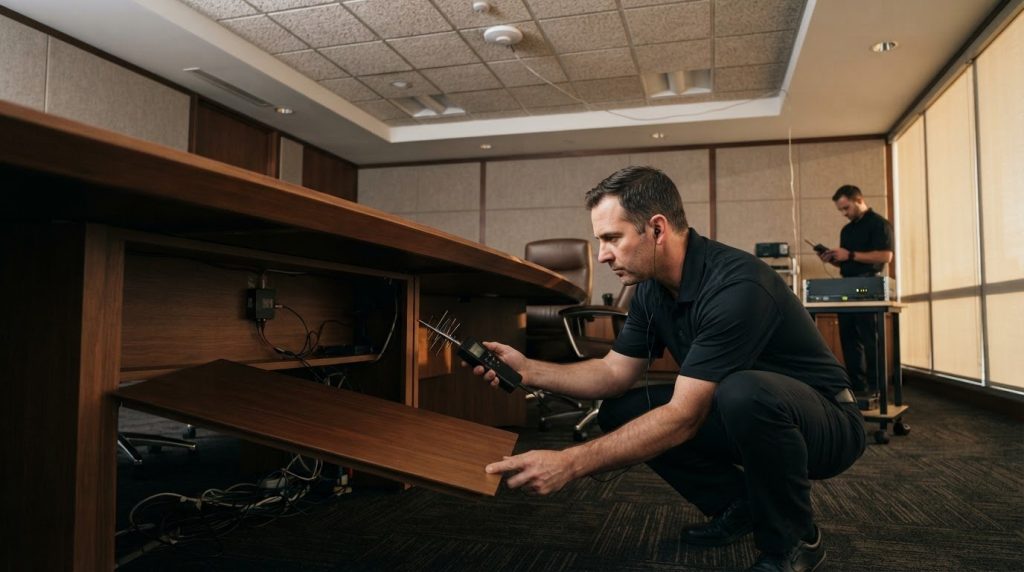
A live signal feed can strengthen vigilance, but it cannot reveal every surveillance risk. Ongoing TSCM monitoring services track radio transmissions to identify active wireless devices and suspicious activity over time. Continuous radio monitoring can miss covert cameras that record locally, miniature voice recorders, and devices that transmit through direct wiring, so it does not replace a professional sweep.
Security teams need to understand what continuous monitoring can detect, where its limits lie, and how it fits into a wider protection programme. This article explains how TSCM monitoring works, when periodic inspections remain important, and how to plan a schedule around the sensitivity of your spaces and operations.
Key Takeaways
- A thorough TSCM assessment coordinates physical, electronic, and network inspections to evaluate different surveillance risks.
- Use signal monitoring to identify active wireless activity, while recognizing that periodic on-site inspections address risks it can miss.
- Integrate TSCM with physical security, cybersecurity, and operational policies so findings inform the wider security programme.
- Set sweep frequency according to the sensitivity of each space and the organization’s risk profile; quarterly or six-monthly reviews may suit sensitive rooms, while higher-risk environments may require more frequent attention.
What are continuous technical surveillance countermeasures (TSCM)?
Continuous TSCM combines monitoring and inspections to identify covert surveillance risks around sensitive information. A corporate programme can pair radio-frequency monitoring with physical, electronic, and network checks.
Covert Device Detection
A professional inspection looks for hidden cameras, microphones, unauthorized electronics, modified wiring, and signs of tampering. Electronic tools, including a non-linear junction detector, can help identify components even when devices are inactive. Physical inspection adds context by checking objects, fixtures, and places where conversations could be overheard.
Coverage has limits: radio monitoring cannot detect a camera recording to an SD card or a miniature voice recorder that does not transmit. Ask which methods address those threats and how the inspection accounts for hybrid surveillance, where a device may record locally or transmit intermittently.
Radio-Frequency Detection
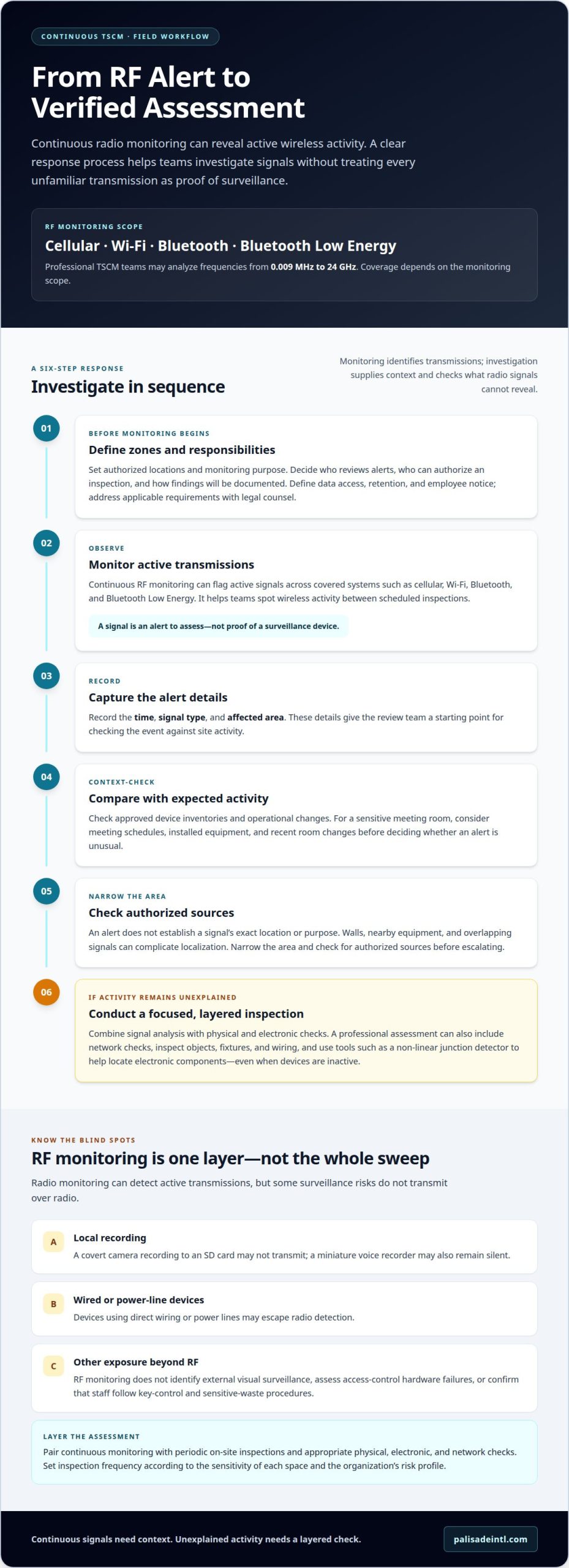
Radio-frequency monitoring analyzes active transmissions across systems such as cellular, Bluetooth, Bluetooth Low Energy, and Wi-Fi. Professional TSCM teams may analyze frequencies from .009 MHZ to 24 GHz. Ask which bands and protocols the monitoring covers, and how analysts distinguish suspicious activity from expected signals in a busy corporate environment.
Continuous monitoring can flag transmitting devices, but it will not identify every threat. Bugs using direct wiring or power lines may escape radio detection. Treat monitoring as one layer, supported by on-site inspection and network checks.
For boardrooms handling sensitive corporate strategy, define the spaces, devices, and information at risk. A TSCM sweep coordinates physical, electronic, and network inspections to assess covert cameras, microphones, wiring, and wireless activity.
When comparing providers, examine their stated detection methods, protocol coverage, reporting, and explanation of blind spots. A clear scope distinguishes continuous radio monitoring from a full inspection.
US privacy requirements depend on jurisdiction and monitoring context. Define authorized locations, purpose, data access, retention, and employee notice before deployment, and address applicable requirements with legal counsel.
Pricing is set after a quote request and depends on the site, inspection scope, monitoring duration, and technical coverage required.
Assess qualifications through demonstrated TSCM experience, relevant technical capability, and clear procedures for reporting findings and limitations. The provider should explain how physical, electronic, and network checks work together.
When choosing a provider, prioritize the ability to assess your actual sites and corporate risk profile. Local proximity matters less than suitable coverage, discreet coordination, and a clearly defined inspection scope.
Detecting unauthorized surveillance devices
Continuous detection helps security teams identify wireless activity between scheduled inspections. It can support protection against technical surveillance, eavesdropping, and espionage, but findings need to be interpreted against authorized devices and normal site activity.
Monitoring can examine cellular, Wi-Fi, Bluetooth, and Bluetooth Low Energy signals. A newly observed transmission may warrant investigation, especially near a confidential meeting room. Security teams can record the time, signal type, and affected area, then compare these details with approved device inventories and operational changes.
RF detection identifies transmissions, but an alert alone does not establish a device’s exact location or purpose. Walls, nearby equipment, and overlapping signals can complicate localization. A useful response process narrows the area, checks for authorized sources, and conducts a focused physical inspection if activity remains unexplained.
Active devices transmit; passive devices may remain silent. Radio monitoring can reveal active signals but cannot identify every dormant or non-transmitting device. Electronic detection tools such as a non-linear junction detector can help locate electronic components in passive devices, while physical checks assess objects, fixtures, and wiring.
Government and corporate sites can have different operational conditions, so define monitoring zones around spaces used for sensitive discussions. For example, assess a boardroom signal alert alongside meeting schedules, installed equipment, and recent room changes. This helps distinguish a relevant threat from routine activity without treating every unfamiliar signal as evidence of surveillance.
Set an escalation path before monitoring begins: identify who reviews alerts, who authorizes an inspection, and how findings are documented. A coordinated technical surveillance assessment can combine signal analysis with physical and electronic checks. For teams planning that layered review, technical surveillance countermeasures provide a relevant next step.
Integrating TSCM into a broader security programme
Technical surveillance countermeasures work best as one layer in a corporate security strategy. Pair them with physical security, cybersecurity collaboration, visitor management, access control, video surveillance, and operational policies. Each measure addresses different vulnerabilities around sensitive conversations and critical information. Ongoing TSCM monitoring services should therefore be part of a defined security process, not a stand-alone response.
Continuous radio monitoring can identify active transmissions, but it does not assess every exposure. It will not detect external visual surveillance, such as someone viewing a computer screen, or determine whether staff follow key-control and sensitive-waste procedures. It also does not assess access-control hardware failures or new office technologies, or provide independent recommendations for broader security improvements. These gaps show why inspections and operational reviews remain necessary.
Use scheduled, holistic, on-site inspections to examine risks that signal monitoring cannot address. A coordinated inspection can include physical, electronic, and network checks, then identify countermeasures suited to the findings. For example, a newly installed meeting-room system may warrant a review of the room’s wiring, access procedures, and wireless activity. Ongoing TSCM monitoring services can complement this work by helping teams observe active transmissions between inspections.
Turn findings into assigned actions rather than treating a report as the endpoint. Security leaders can document each concern, assign an owner, and track remediation through existing risk processes. If an inspection identifies a hidden device or vulnerable meeting space, responses may include securing the area, reviewing access, and assessing whether additional technical or operational measures are appropriate.
- Physical security: Review access control, visitor management, and video surveillance around sensitive spaces.
- Cybersecurity: Coordinate network findings with the teams responsible for connected devices and system security.
- People and procedures: Reinforce meeting protocols, key control, and handling of sensitive wastepaper.
- Business priorities: Set inspection scope around critical conversations, assets, and operational requirements.
Keep periodic on-site TSCM audits in the programme even when continuous monitoring is in place. Radio monitoring focuses on transmitting threats, while wider inspections help identify vulnerabilities across physical, technical, and human practices. Review the programme after office changes or new technologies are introduced, then update responsibilities and remediation priorities to reflect the current environment.
Quarterly, six-monthly, and monthly sweep schedules
Traditional TSCM sweeps are point-in-time inspections, often scheduled quarterly or around a sensitive event. A completed sweep describes conditions during that inspection; it cannot establish whether a room remains clear after later access, refurbishment, or equipment changes.
For routine planning, Mission Support says most organisations should consider quarterly or six-monthly sweeps for their most sensitive rooms. Organisations under sustained intelligence interest may sweep key rooms monthly and the whole building every quarter. Treat these as risk-based schedules, not a universal timetable: the sensitivity of conversations, threat concerns, and changes to the premises should guide frequency.
Schedule technical inspections before board or executive meetings, mergers and acquisitions, legal or financial strategy discussions, and intellectual-property or product-development meetings. Government contracts and healthcare or patient-privacy discussions may also warrant attention. A pre-meeting sweep assesses the room before confidential information is discussed, but does not replace broader security measures.
After an incident or credible concern about surveillance, assess the relevant people, business, partners, staff, and location. An unexplained information leak or unusual wireless activity can help define where to focus an inspection. Office refurbishment is another trigger because contractors and fixture changes can alter access to spaces where eavesdropping devices might be placed.
Match the method to the concern. An electronic sweep can identify active transmissions, while physical and other technical checks address risks radio monitoring may miss. After a finding, document the affected area, preserve relevant observations, and set remediation steps before deciding whether the next inspection should cover one room or the wider site.
Build a calendar around sensitive events and review it after site changes or new concerns. Schedule a TSCM sweep to assess a meeting space or establish an inspection plan suited to your security needs.
Palisade International: Executive Protection
Palisade International LLC provides executive protection for leaders whose security concerns extend beyond the privacy of meeting spaces. If a TSCM inspection identifies broader exposure around executive travel, workplace conditions, or sensitive operations, consider how those findings connect with personal and organizational risk.
Risk Analysis & Vulnerability Assessments can help assess security priorities, while Workplace Violence Prevention addresses workplace-related threats. Private Investigations may support situations requiring fact-finding. These services address distinct needs; a monitoring system or sweep alone does not resolve every wider security concern.
For security teams, the practical next step is to turn inspection findings into clear priorities and determine whether executive protection or a broader risk assessment is relevant. Contact Palisade International LLC to discuss your security requirements, ensuring your ongoing TSCM monitoring services align with your overall protection strategy.
Make Monitoring Part of a Deliberate Security Plan
Choose ongoing TSCM monitoring services as part of a wider decision about how your organization protects sensitive operations. Define who reviews alerts, how findings reach decision-makers, and how technical results inform physical security and executive risk planning. A clear process helps security teams turn monitoring into accountable action rather than an isolated technical function.
Palisade International offers Executive Protection, Workplace Violence Prevention, and Risk Analysis & Vulnerability Assessments. These services can support organizations assessing how technical concerns relate to personnel, leadership, and broader vulnerabilities. The appropriate focus depends on the security priorities your organization needs to address.
Discussing those priorities can help establish a considered path forward, whether you are planning a TSCM assessment or aligning it with a broader security programme. Contact Palisade International to discuss TSCM and take the next step with clarity and discretion.
Frequently Asked Questions
What is TSCM?
TSCM means technical surveillance countermeasures, a process for identifying and addressing risks from unauthorized surveillance. It differs from an IT audit, employee monitoring, or an internal investigation because its focus is technical surveillance in a physical environment. For a corporate team, the scope might include a meeting room, executive office, vehicle, or network-connected space where confidential discussions take place.
How can you further protect yourself?
Reduce opportunities for unintended disclosure by keeping personal electronic devices out of sensitive meetings and restricting devices during highly confidential discussions. Limit room access to people with a clear operational need, and report unfamiliar equipment or unexpected fixture changes through established security channels. Combine these practices with access control and cybersecurity coordination so technical findings inform everyday procedures.
What are the devices used?
TSCM specialists use different tools for different detection tasks. Signal-analysis equipment can identify active radio transmissions, while a non-linear junction detector can help locate electronic components in passive devices. Physical inspection examines objects, wiring, and signs of tampering; thermal imaging and wire tracing may also form part of traditional countermeasures. No single instrument assesses every type of surveillance risk.
What is it?
Continuous TSCM monitoring is an ongoing approach to observing radio transmissions for suspicious wireless activity. It differs from a sweep, which examines a space at a particular time. For example, a monitoring system may flag a new transmission in a protected room, while a separate inspection investigates the room and assesses risks that do not transmit signals.
What’s the purpose?
The purpose is to help security teams identify technical surveillance risks before or during sensitive operations, then decide on proportionate countermeasures. Monitoring can contribute to protecting confidential conversations and business continuity, but it is only one security layer. Teams can use findings to prioritize inspections, review room access, and coordinate technical concerns with physical security and cybersecurity staff.
When should it be done?
Consider an inspection before a sensitive board meeting, merger discussion, or intellectual-property session, and after office refurbishment or credible surveillance concerns. An unexplained information leak or unfamiliar wireless activity can also prompt a review. For routine planning, set the schedule according to room sensitivity and risk profile; quarterly or six-monthly checks may suit sensitive rooms, while sustained intelligence interest can warrant monthly sweeps.