
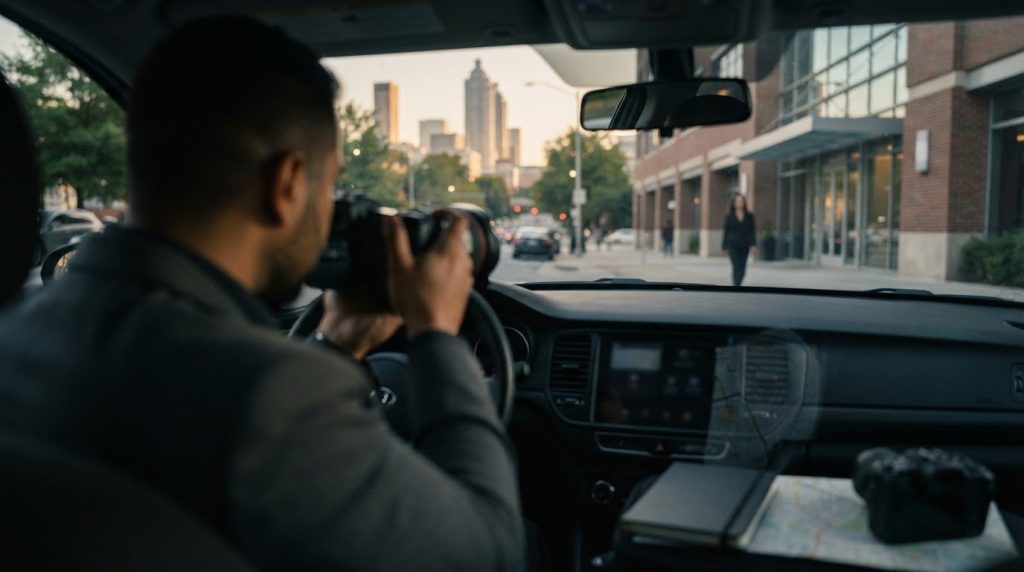
The right surveillance method is rarely the most visible one. A search for private surveillance atlanta often starts with a practical question: which approach fits the investigative objective without creating unnecessary exposure? The answer depends on what needs to be established, where relevant activity may occur, and what information the investigation needs to collect.
It’s reasonable to want clarity before commissioning surveillance, especially when privacy and discretion matter. Professional investigative work starts with a defined purpose, not informal observation. Palisade International’s licensed investigators conduct surveillance for civil and criminal matters, using mobile, stationary, covert, or unmanned methods as appropriate to the case. This guide explains how those approaches differ, how field methods and technology can support evidence collection, and why privacy boundaries belong in the planning process. You’ll also find what details to organize before discussing your matter with Palisade International, so the conversation can focus on your objective and the context that may shape an investigative plan.
Key Takeaways
- Start with the question your investigation needs to answer. That objective guides the surveillance plan.
- Consider how mobile, stationary, covert, and unmanned methods may fit different settings and investigative needs.
- For private surveillance atlanta, weigh discretion, location, and documentation needs when considering an approach.
- Organize relevant facts, locations, records, and concerns before discussing your case through an appropriate confidential channel.
- Palisade International tailors surveillance for civil and criminal matters, with licensed investigators and methods selected for each case.
Private Surveillance in Atlanta: Start With the Question You Need Answered
Private surveillance is planned observation and information gathering conducted as part of a broader investigation. Its purpose is not simply to watch someone, but to gather relevant information that may clarify a defined matter. A private investigator may use surveillance alongside other investigative work, with the approach shaped by the objective and circumstances of the case.
That distinction matters. Informal observation can be reactive, inconsistent, and poorly documented. A professional engagement starts with a specific investigative objective, then considers what can be observed, where, and by what means. Surveillance can contribute information, but it cannot guarantee that a particular event will occur, resolve every question, or produce a desired outcome.
Which Atlanta-area situations may call for investigative surveillance?
Surveillance may support investigations involving domestic matters, child custody, missing persons, or insurance questions. In business settings, it may be considered in matters involving suspected corporate or employee theft, or as one part of due diligence. These are possible contexts, not automatic reasons to conduct surveillance. The key question is whether planned observation can help establish information relevant to the matter.
Each case calls for discretion and careful handling of sensitive details. For example, an organization concerned about possible theft should distinguish what is documented from what remains unknown, rather than treating suspicion as proof. In a family matter, the objective should stay focused on information relevant to the specific concern. A tailored plan helps keep the investigation connected to its purpose.
What should the investigation establish?
Begin with a clear, relevant question. “What needs to be established?” is more useful than broad or speculative monitoring because it gives investigators a basis for assessing whether surveillance fits and what information may matter. For private surveillance atlanta, the objective should guide the discussion before anyone considers a field method.
Separate known facts from open questions. A concise case brief can help:
- Known: Record dates, events, documents, or observations you can describe directly.
- Uncertain: Identify what you need investigators to establish, without presenting assumptions as fact.
- Relevant: Explain how the information could relate to the underlying personal or business matter.
Share relevant context with the investigator, including any sensitivity, safety, or privacy concerns. Legal boundaries depend on the circumstances and the type of information sought; they should be reviewed accurately and currently before an investigative plan proceeds. Avoid relying on informal assumptions about where observation or recording is permitted. A defined objective and careful consideration of privacy give the investigation a disciplined starting point without presuming what it will find.
How Private Surveillance Works in Atlanta: Mobile, Stationary, and Covert Methods
Surveillance methods differ in how they relate to movement, location, and visibility. The investigative objective helps determine which approach may fit, alongside the setting and practical constraints. A plan for observing activity across several locations differs from one focused on a specific place. Neither method suits every case, and surveillance is not a fixed package applied the same way to each client.
Mobile surveillance follows movement between locations; stationary surveillance observes from a selected position. This distinction is a useful starting point, not a complete decision. Investigators consider what the case needs to establish, where relevant activity may occur, and which approach can be conducted discreetly and appropriately under the circumstances.
When might mobile or stationary surveillance fit?
Mobile surveillance may be considered when the investigative question concerns movement across locations. Stationary surveillance may fit a question focused on activity at or near a selected position. Neither description establishes that an approach is suitable for a particular site or case. Location, visibility, access, and the need to limit unnecessary exposure all inform method selection.
In private surveillance atlanta, the method should follow the case rather than dictate it. Investigators may combine approaches when circumstances warrant. The purpose remains the same: gather information relevant to the defined objective without assuming what the investigation will reveal.
What do covert and unmanned surveillance mean?
Covert surveillance refers to discreet observation using investigative methods suited to the circumstances. Unmanned surveillance uses equipment positioned to observe without an investigator continuously operating beside it. These terms describe different aspects of an approach: covert concerns discretion, while unmanned describes how observation is conducted. Neither removes the need to consider the setting and privacy boundaries.
Palisade International uses camouflaged cameras, including vehicle-mounted, tree-mounted, and utility-box-disguised options. Surveillance equipment can also upload evidence to the cloud. These capabilities may inform a tailored plan, but equipment alone does not determine what information will be captured or resolve the investigative question.
Method selection also involves professional judgment. The National Council of Investigation and Security Services provides context on the private investigation and security profession, including its ethical considerations. In practice, discretion means more than minimizing visibility. It also means aligning the method with the case purpose and handling information carefully.
- Movement: Does the question involve activity across locations or at one selected position?
- Visibility: What level of discretion does the setting and objective require?
- Documentation: What information would be relevant to the investigation?
Discussing these factors with Palisade International’s surveillance team can help frame an approach around the case objective, setting, and discretion needs.
Choosing an Atlanta Surveillance Approach: Discretion, Documentation, and Case Fit
A sound surveillance plan is measured by its fit with the investigative need, not by how much activity it generates. For private surveillance atlanta, consider five connected factors: the question to answer, the setting, the discretion required, the method under consideration, and the documentation that could be useful. Each factor helps narrow the approach and keep the engagement aligned with its purpose.
For broader context on how surveillance can fit within a larger investigative matter, Palisade International’s Atlanta private investigator guide explores investigative work in Atlanta. The same case-focused discipline applies when assessing a surveillance plan.
How should clients assess discretion and method fit?
Discretion depends on the circumstances, the setting, and the method selected. Mobile observation may fit when relevant activity involves movement; stationary observation may fit a question centered on a selected location. Covert or unmanned methods may also be considered when appropriate to the objective and setting. These are options to assess, not automatic recommendations. Covert equipment does not remove privacy obligations or make an otherwise unsuitable approach appropriate.
Use these prompts to structure the discussion:
- Objective: What specific information would help address the matter?
- Setting: Where might relevant activity occur, and what contextual constraints affect observation?
- Discretion: What exposure could affect the people, property, or investigation?
- Method: Would mobile, stationary, covert, or unmanned observation best fit the question?
- Documentation: What records or observations would be relevant to the case?
This framework helps distinguish a focused plan from broad monitoring. It also gives investigators a clearer basis for tailoring the approach instead of defaulting to a fixed method.
What can documentation and forensic analysis contribute?
Documentation can organize observations and other information gathered during an investigation. The useful form and level of detail depend on the case objective and how the information may be used. Palisade International’s investigative capabilities include evidence collection and forensic analysis; surveillance equipment can also upload evidence to the cloud. These capabilities support investigative work, but they don’t guarantee a particular finding or establish that material will be admissible in a legal proceeding.
Clients should describe the intended context for the information, such as a business review or a matter involving legal counsel. That context can help shape documentation priorities without assuming what a court or other decision-maker will accept. For related case-support considerations, see the litigation support guide.
Legal boundaries can depend on the circumstances and the type of observation or recording involved. Avoid relying on general assumptions; applicable Georgia requirements should be reviewed accurately and currently before a plan proceeds. A careful approach considers privacy from the outset, rather than treating discretion or technology as a substitute for responsible planning.

Preparing for Private Surveillance in Atlanta: Information to Organize
A focused initial discussion helps an investigator understand the concern, distinguish established facts from assumptions, and consider which investigative steps may fit. Before discussing private surveillance atlanta, organize the information you already have. You don’t need to resolve every uncertainty first; a clear account of what prompted the inquiry and what you need to learn gives the conversation a practical starting point.
What information helps frame an Atlanta surveillance inquiry?
Prepare a concise summary of the concern, relevant events, and the question you need addressed. Include information that helps explain the circumstances, but separate firsthand knowledge from interpretation. If there is an immediate safety concern, state it at the outset so it can inform the discussion.
Useful context may include known locations, schedules, dates, and records tied to the matter. Focus on what is relevant rather than collecting unrelated personal information. For sensitive records or details, use an appropriate confidential communication channel and share only information connected to the inquiry.
Before the case discussion, work through this sequence:
- Define the objective. Describe what you need the investigation to establish, in a clear and relevant question.
- Organize known facts. Note key events, dates, records, and what you personally know, while marking any uncertainty.
- Identify relevant locations and context. List places, schedules, or other circumstances that may help explain where relevant activity could occur.
- Raise concerns. Explain privacy, discretion, or safety considerations that may affect how the matter should be approached.
What should clients expect from an initial case discussion?
The first discussion establishes the objective, reviews relevant context, and helps determine appropriate investigative next steps. It is also an opportunity to explain which information matters most and what sensitivities should shape the engagement. Palisade International tailors surveillance methods and deployment to the circumstances of each case rather than treating every inquiry as the same assignment.
Discretion and careful handling of sensitive information matter, but they shouldn’t be mistaken for an absolute guarantee about every communication or outcome. Share sensitive material through an appropriate channel, and clarify the intended purpose of records before providing them. A composed, factual briefing helps the investigator assess the matter without overstating what is known or presuming what surveillance may find.
There is no need to predict a timeline or a result during preparation. The practical next step is to provide a clear account, identify the question at hand, and discuss circumstances that could affect a suitable plan. This creates an informed basis for considering whether surveillance fits and how it may be tailored.
Discuss your surveillance inquiry with Palisade International with your objective and relevant context organized.
Palisade International Private Surveillance in Atlanta: A Discreet Next Step
Choosing private surveillance atlanta begins with a clear objective and a plan suited to the circumstances. Palisade International conducts private investigations for civil and criminal matters, with licensed investigators who maintain the education and skills required for their work. Each engagement is client-centered, with discretion and case context informing how investigators approach the assignment.
This tailored approach can support individual and business investigations, where the relevant question, setting, and sensitivity of the matter may differ. Surveillance supports the broader investigation; it does not promise a particular finding. The next step is a focused discussion about what you need to establish and the context that may shape an appropriate approach.
What distinguishes Palisade International’s surveillance capabilities?
Investigators use mobile, stationary, covert, and unmanned surveillance methods, selecting an approach according to the objective and circumstances. Available equipment includes camouflaged cameras that may be vehicle-mounted, tree-mounted, or disguised as utility boxes. Surveillance equipment can upload evidence to the cloud. These are investigative tools, not assurances about what an investigation will capture or establish.
In a missing-person investigation, surveillance confirmed the person’s location, and photographs were provided to the family. That account illustrates how information gathered in a specific case can address a defined need; it should not be taken as a promise of similar findings in another matter. Every investigation has its own facts, constraints, and purpose.
For readers considering security beyond investigative surveillance, Palisade International’s Atlanta security companies guide offers broader context on security capabilities in the area. Distinguishing an investigative objective from a wider security requirement can help clarify what kind of support is relevant to the situation.
How can an Atlanta-area client take the next step?
Prepare to discuss the question the investigation should address, the facts you know, relevant locations or events, and any privacy or safety concerns. If the matter involves records or other sensitive information, share relevant context through an appropriate confidential communication channel. This keeps the initial discussion focused while giving investigators useful background.
During that discussion, Palisade International can consider the objective and circumstances together and tailor investigative next steps accordingly. The method is not selected in isolation: setting, discretion, and the information sought all matter. This measured process helps establish a case-specific direction without presuming the outcome.
Take the Next Step With a Clear Objective
A considered approach to private surveillance atlanta begins with deciding what information would genuinely help you move forward. You don’t need to have every detail resolved before opening a discussion. A concise account of the concern, the facts you can share, and any sensitivities around the matter can help shape a focused conversation about possible investigative next steps.
Discretion is not simply a matter of keeping an inquiry out of view. It also means approaching the work with care, respecting the circumstances, and keeping the investigation connected to its purpose. Palisade International brings that individualized perspective to surveillance inquiries, with licensed investigators and methods tailored to the case. No investigation can promise a particular finding, but a clear objective provides an informed starting point.
If you’re ready to discuss your circumstances, speak with Palisade International about a discreet surveillance inquiry. A measured first conversation can help you determine a practical direction with greater clarity and confidence.
Frequently Asked Questions
Is private surveillance legal in Atlanta?
Private surveillance in Atlanta may be lawful, but legality depends on the location, method, and circumstances. Georgia law restricts observing or recording people in private places where they have a reasonable expectation of privacy; video recording there generally requires consent from everyone observed. Audio recording follows a different rule, generally requiring consent from at least one conversation participant. Because details matter, review current Georgia requirements for the specific situation before proceeding.
Can a private investigator conduct covert surveillance in Georgia?
Yes, investigators may conduct covert surveillance when the method and circumstances are appropriate, but covert does not mean unrestricted. Privacy expectations, the setting, and the type of observation or recording can affect what is permissible. A discreet approach should be planned around the investigative purpose and applicable requirements, not used to evade them. Palisade International’s investigators conduct surveillance as part of private investigations, tailoring methods to the case.
How long does a private surveillance investigation take in Atlanta?
There is no standard duration for every Atlanta investigation. The time required can depend on the objective, the circumstances being investigated, and whether relevant activity occurs during the planned observation. For example, a focused inquiry tied to a known event may differ from a matter with less predictable activity. Discussing the scope and available information early helps establish realistic next steps, but no specific timeline or finding should be assumed.
What information should I provide before a surveillance investigation?
Provide a concise account of the concern, what prompted it, and what you need the investigation to clarify. Include relevant dates, locations, schedules, and records, while distinguishing firsthand observations from assumptions. If a safety issue or privacy sensitivity affects the matter, raise it at the outset. Share only relevant material through an appropriate confidential channel, and avoid altering or annotating original records in ways that could obscure their context.
Can surveillance evidence be used in court?
Surveillance material may be considered in a legal matter, but its usefulness and admissibility depend on the case, how it was obtained, and the court’s assessment. No investigator can guarantee that a particular recording or report will be admitted or given a specific weight. If litigation is involved, explain the intended use before the investigation begins and coordinate with legal counsel about case-specific requirements and how collected material should be handled.
Does private surveillance in Atlanta include hidden or unmanned cameras?
It can. Palisade International uses camouflaged and unmanned surveillance equipment, with options including vehicle-mounted, tree-mounted, and utility-box-disguised cameras. Equipment can upload evidence to the cloud. Whether a camera-based approach fits depends on the objective, setting, and applicable privacy considerations. Camouflage does not make restricted observation permissible, and equipment capability alone cannot guarantee that relevant activity will be recorded.
Can surveillance help with a missing-person investigation?
Surveillance may contribute to a missing-person investigation when observation can help establish relevant information about a person’s location or activity. Its suitability depends on the known circumstances and the investigative objective. Share verified details, relevant recent events, and any immediate safety concerns during the initial discussion. Surveillance cannot guarantee that a person will be located, so avoid treating it as a certain outcome or as a substitute for urgent assistance when someone may be in immediate danger.